
Every November we get the same call. Somebody looked out the window after the first real snow, saw the lawn disappear under it with a season's worth of leaves still on top, and wants to know whether it is too late.
Sometimes it is not. But the honest answer is that the leaves were the easy part. What happens underneath them over the next four months is the part that costs money in April.
We have been doing fall cleanups across Boston, Framingham, Everett and the Metro West towns since 2005, on everything from small city backyards to bank branches and retail plazas. Here is what actually matters before the snow comes, and what you can safely skip.
Why Wet Leaves Under Snow Kill a Lawn
A dry leaf on a lawn in October is harmless. A wet mat of oak and maple leaves sitting on the same lawn from December to March is something else entirely.
Snow presses the mat flat. It stops being a layer of leaves and becomes something closer to a tarp: no light gets through, no air moves under it, and the grass crowns beneath it stay damp all winter. That cold, wet, dark pocket is exactly what snow mold needs. Come spring you lift the mat and find gray, matted, dead patches in the precise shape of wherever the leaves piled up.
This is the single most common cause of the "my lawn died over the winter" call we get in March, and it is entirely preventable in an afternoon in November.
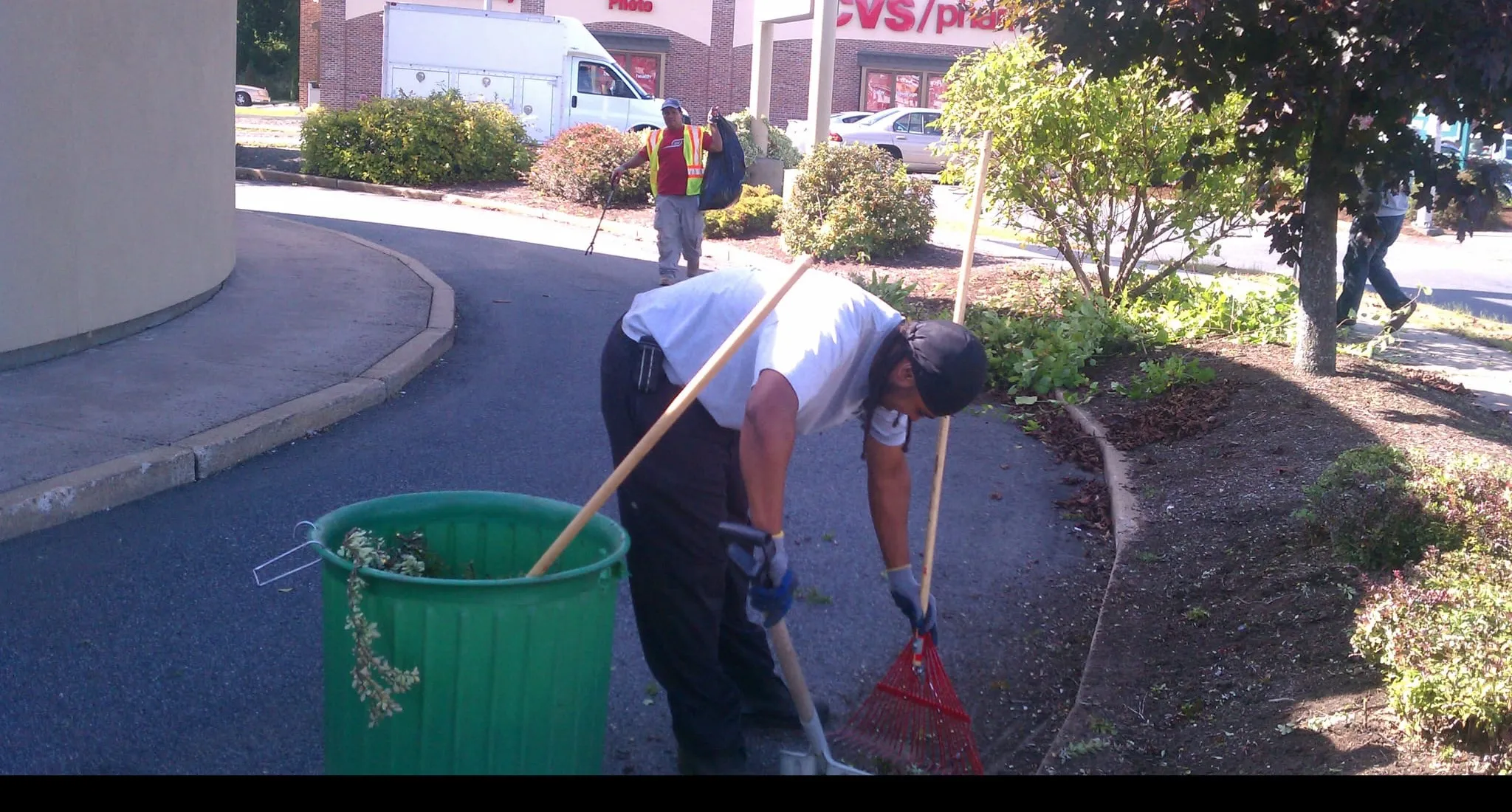
Timing: Read the Trees, Not the Calendar
The most common fall cleanup mistake is doing it too early. Clear the yard in mid-October and in most of Greater Boston you will be looking at a fresh layer two weeks later, because the trees were not finished.
The trees tell you when. Maples and birches drop first. Oaks are the stubborn ones and can hold a large share of their leaves into late November. If your property sits under oaks, plan on either one late visit or two visits: one to clear the bulk, one to catch what the oaks let go of last.
The other deadline is the ground itself. Once it freezes, and certainly once the first snow that sticks arrives, you are no longer cleaning up. You are hoping. In a typical year that leaves most of November as the working window. Some years it closes early.
The Before-Snow Checklist
This is what a proper fall yard cleanup covers, in roughly the order it matters:
- Leaves off the turf. Not every last one, but no mats. If you can see grass through it, a mulching mower can handle it. If you cannot, it has to come up.
- Leaves out of the beds and foundation plantings. Wind piles them deepest against the house and in corners, which is exactly where the moisture and the rodents overwinter.
- A last mow, a notch lower. Around two and a half to three inches. Long grass lies down under snow and holds moisture; scalped grass leaves the crown exposed. Split the difference.
- Perennials cut back where it helps. Hostas and daylilies collapse into mush and are best cut down. Sturdy stems and seed heads can stand through winter if you like the look, but nothing soft should be left to rot on the crown.
- Gutters cleared. A gutter packed with leaves cannot carry meltwater, which is how you end up with overflow at the foundation and ice building at the roof edge. We covered ice dams in our snow removal guide.
- Hardscape blown clear. Wet leaves left on a patio, walkway or set of steps stain the stone and turn slick the moment it freezes. Snow shovelled or plowed over them just buries the problem until March.
- Everything hauled away legally. More on that below.
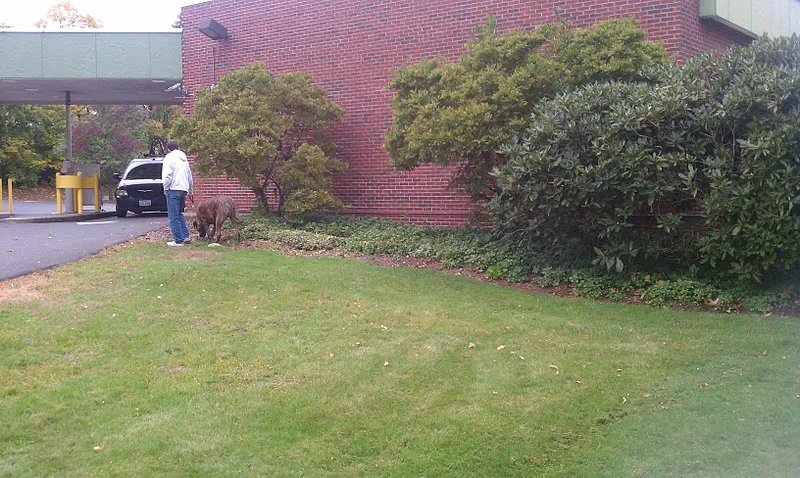
Commercial Properties: Clear It Before the Plow Does
On a commercial site the stakes are different. A parking lot or plaza with leaves in the curb lines and catch basins going into winter is a lot whose drainage is already half blocked. When the first storm melts, that water has nowhere to go, it sits, and then it refreezes overnight into the ice your tenants and customers walk across in the morning.
Leaves under the first plowing also get pushed into the snow piles, where they sit in a wet heap on the edge of a bed or a strip of lawn until spring. Clearing lots, islands and curb lines before plow season starts is cheaper than repairing the turf and beds afterward.
If you are already lining up snow removal for the winter, it is worth having the same crew do the fall cleanup. They know where the beds, curbs and drains are, and they will see them again in a few weeks under two feet of snow.
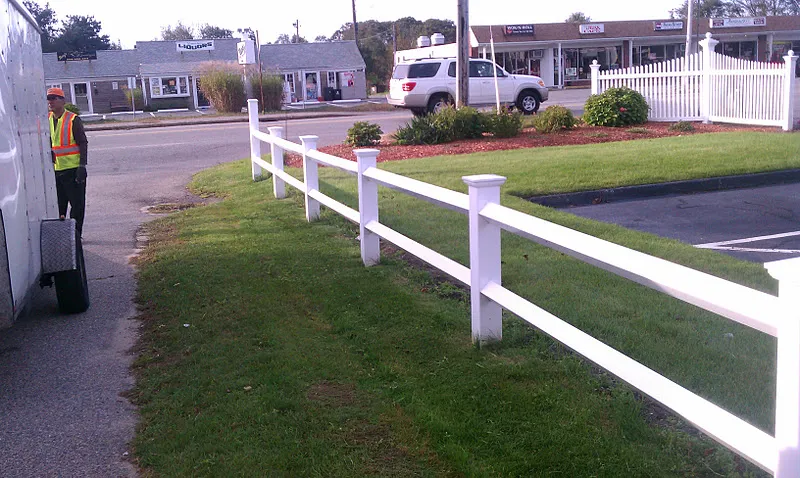
Where the Leaves Go Matters in Massachusetts
This is the part most of the country does not have to think about. Massachusetts has banned yard waste from disposal since 1991. Under 310 CMR 19.017, leaves, brush and grass clippings cannot go to a landfill or a combustion facility. They have to be composted or otherwise recycled.
That is not our policy, it is the Commonwealth's. It is also why a cleanup crew that quietly bags your leaves in with the trash is creating a problem rather than solving one. When we finish a cleanup, the material leaves your property to a legitimate destination.
Booking a Fall Cleanup
For most homes you can skip the phone call entirely. Our fall cleanup can be booked online by property size: $250 for 1,500–2,000 sq ft, $750 for 2,001–5,000 sq ft and $1,500 for 5,001–10,000 sq ft. Pick a date and you are on the schedule.
Larger properties, heavily wooded lots and commercial sites we quote in person, because the leaf load under a stand of old oaks is not something a square-footage band can predict. Request a free estimate and we will walk it with you. Want to see the kind of work we do before you call? Have a look at our projects.
Common Questions
When should I schedule fall cleanup in Boston?
Aim for the stretch after most of the trees over your property have dropped and before the ground freezes or the first snow sticks. In Greater Boston that usually means November. Properties under oaks often need a second pass, because oaks hold their leaves weeks longer than maples. Book in October so you have a date, and let the crew time the visit to the trees rather than the calendar.
Do I have to remove every leaf from my lawn?
No. A light scatter of leaves can be run over with a mulching mower and left to break down. It is the mat that kills grass: a layer thick enough that you cannot see the lawn through it. That mat gets pressed flat by snow, stays wet all winter, and smothers the turf underneath. Thin is fine. Matted is not.
How short should the last mow of the year be?
A little shorter than your summer height, around two and a half to three inches for most Boston lawns. Long grass flops over under snow and holds moisture at the crown, which is what snow mold wants. Scalping it is the opposite mistake, because it leaves the crown exposed to the cold. Bring it down a notch, not all the way.
Can I put leaves out with the trash in Massachusetts?
No. Yard waste has been banned from disposal in Massachusetts since 1991 under 310 CMR 19.017. Leaves, brush and grass clippings have to be composted or recycled, not landfilled or burned. Most towns run curbside yard-waste collection or a drop-off site. When we do a cleanup, the material leaves your property to a legitimate destination.
How much does a fall cleanup cost?
Our fall cleanups can be booked online by property size: $250 for 1,500–2,000 sq ft, $750 for 2,001–5,000 sq ft and $1,500 for 5,001–10,000 sq ft. Larger properties and commercial sites are quoted after a free on-site look, because the leaf load under a stand of oaks is not something a square-footage band can predict.
Written by Yacine Ibrahimi, Founder & CEO of Casablanca Services, Inc.. Casablanca Services has worked in Greater Boston since 2005 and is listed by the City of Boston as a local mattress recycler. Questions? Call (508) 271-5655.