
By mid-November a commercial property should have its irrigation blown out, its drains and catch basins clear, its trip hazards fixed or marked, salt stocked and staged under cover, and every curb, island and hydrant staked before snow hides it. Most of that can still be caught up in the next couple of weeks. The pieces that cannot wait are the ones that need soft ground or a day above freezing.
Here is the checklist we would walk a property or facility manager through, in the order the window closes.
Has the irrigation been shut down and blown out?
This is the one with a hard deadline. Water left in the lines, valves and backflow preventer freezes, expands and cracks them. The damage is invisible until the system is switched on in April and a zone floods or will not pressurize. Around Greater Boston, blowouts usually happen from late October into November. If yours has not been done, call whoever services the system this week. Confirm the backflow assembly was drained or insulated and the controller is off, not just paused.
Is the drainage ready for freeze-thaw?
Leaves in the curb lines and catch basins should already be out; if they are not, our fall cleanup checklist covers why that matters before the plow arrives. The rest of drainage is about where water will go in January:
- Downspouts discharging onto walkways, steps or parking areas. Every one of them is a sheet of ice on the first cold night after a thaw.
- Low spots in pavement or walks that hold water now. They will hold ice later.
- Splash blocks and extensions that have been knocked out of place during the season.
- Swales and inlets around the lot that are silted or overgrown.
Massachusetts winters cross the freeze line constantly. A day at 40°F followed by a night at 18°F turns every drainage mistake into a slip hazard, and it happens dozens of times between December and March.
Are the walkway surfaces safe before they are covered?
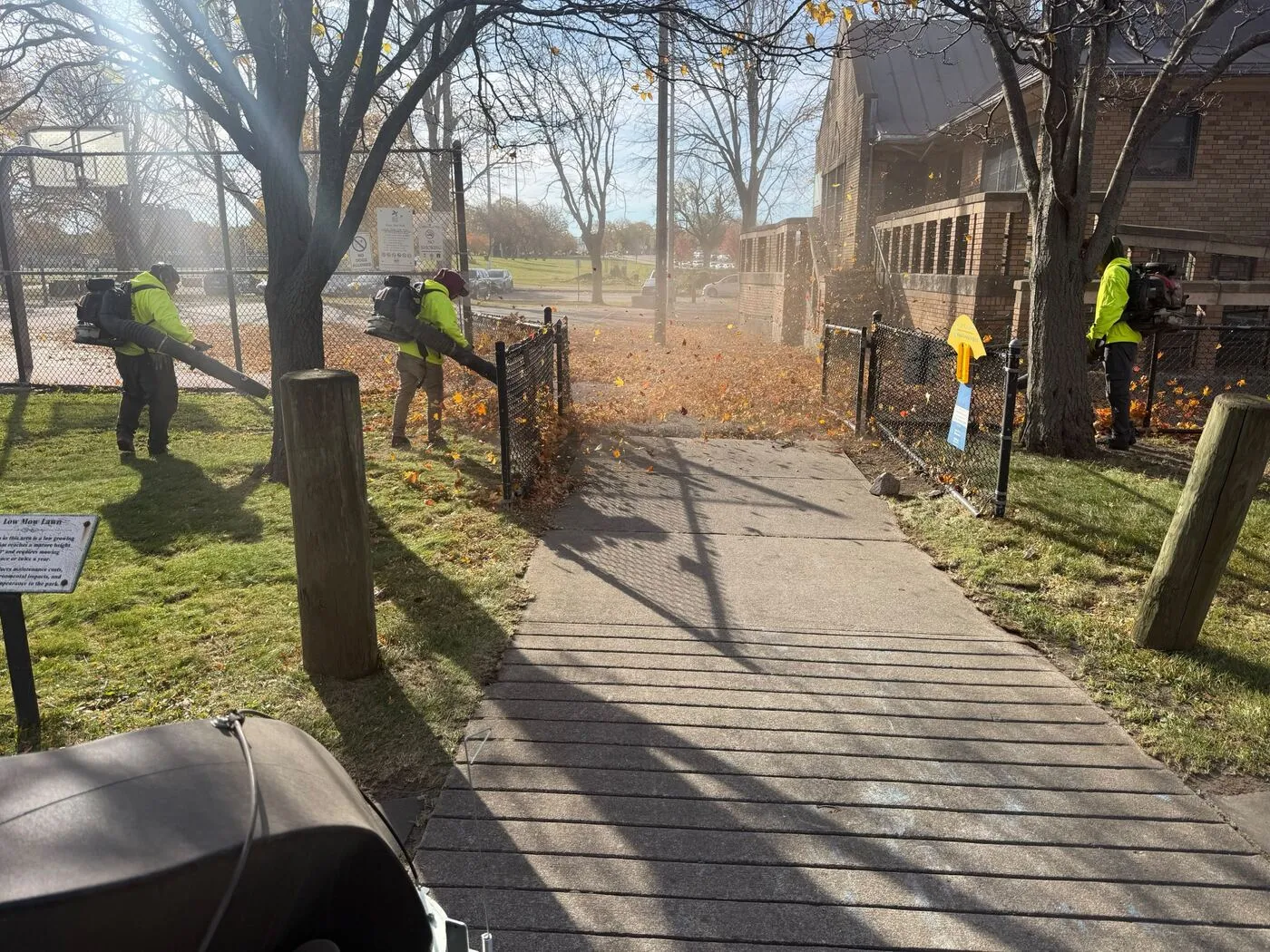
Snow and ice make an uneven surface worse, and a plow or a shovel blade will find every raised edge. Walk every pedestrian route on the property now and look for:
- Heaved or sunken pavers, and joints that have lost their sand
- Raised slab edges and cracked concrete at entrances and ramps
- Loose stair treads, wobbly handrails and missing nosings
- Broken edging where a walk meets a bed or lawn
Small paver resets and edge repairs are still possible while the ground is workable. Anything that cannot be fixed before freeze-up should be marked and, where it is on an accessible route, reported to whoever is responsible for the property, so it can be managed through the winter rather than discovered under the snow. For larger repairs, our hardscaping crews can scope the work for spring.
Is salt stocked and staged where it will be used?
Salt bought after the first storm is salt bought at the worst time. Before the season starts:
- Covered storage. Bulk salt stored on a hard surface under cover, away from drains, catch basins, plantings and water. Uncovered salt cakes solid in the first freeze and runs off in every rain.
- Staged by the doors. Bagged salt or ice melt in sealed bins at each entrance it will be used on, off the ground.
- Hand spreaders ready. Walk-behind or hand spreaders checked and working, so walkways get an even application rather than handfuls.
- The right material. Rock salt loses most of its effect below roughly 15°F. Have a plan for the coldest nights, and keep a gentler product for new concrete and pavers.
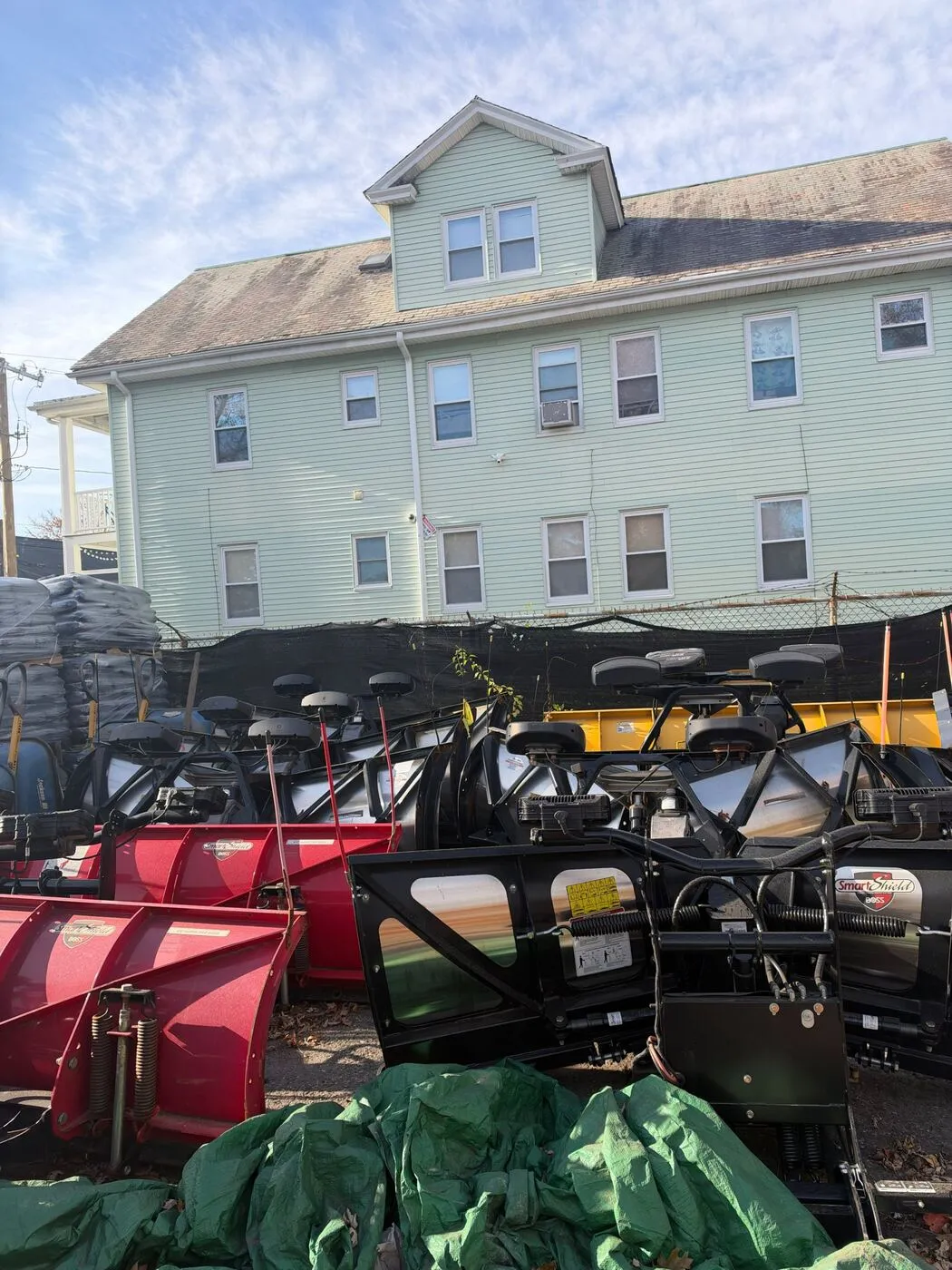
If a contractor handles your snow and ice, ask them where their salt is stored and whether it is stocked before the first storm. Ours is kept on site under cover, alongside the brine tank and walk-behind spreaders listed on our equipment page.
Have hazards been marked before snow hides them?
Six inches of snow erases curbs, traffic islands, fire hydrants, catch basins, low walls, bollards and the edge of every bed. Plow damage to these is common, expensive and almost always avoidable. Stake them now, with poles tall enough to stand above a pile, while the ground will still take a stake.
The same walk should settle where the snow will go:
- Stacking areas agreed in advance, downhill of walkways so meltwater does not refreeze across them
- Fire lanes, hydrants and accessible spaces and routes kept clear
- No piles on catch basins, on plantings, or against walls and fences
- Dumpster pads and loading docks identified, with any timing they need
What can still be caught up, and what cannot?
Still doable after the ground freezes: staking hazards (with a drill if needed), staging salt, clearing drains and inlets, marking trip hazards, agreeing the snow plan.
Closing now: irrigation blowout, regrading low spots, resetting pavers, and concrete repairs that need a day above freezing to cure.
And if the snow contract itself is not signed yet, that window is closing too. Our guide to what a commercial snow contract should specify covers trigger depths, salt terms, response windows and site maps.
Casa Blanca Services, Inc. handles commercial snow and ice management and grounds maintenance for commercial lots, condominium and HOA properties and apartment buildings across Greater Boston. We walk the site, map the obstacles and drainage, and agree stacking areas before the first storm. If you would like a second set of eyes on your property before winter, call and we will walk it with you.
Common Questions
When should a commercial irrigation system be winterized in Massachusetts?
Before the first hard freeze, which around Greater Boston usually means late October into November. Water left in lines, valves and backflow preventers freezes, expands and cracks them, and the damage often does not show until the system is turned on in spring. If it has not been blown out yet, call whoever services the system this week.
Where should salt be stored on a commercial property?
Covered, on a hard surface, and away from storm drains, catch basins, plantings and water. Uncovered salt cakes into a block in the first freeze and runs off in every rain, which wastes the material and damages the turf and pavement around it. Bagged salt for walkways belongs near the entrances it will be used on, off the ground and out of the weather.
What should be marked before the first snow?
Anything a plow or a snow pile could hit or bury: curbs, traffic islands, fire hydrants, catch basins, low walls, bollards, the edges of beds and walkways, and any spot where pavement drops away. Stakes or snow poles tall enough to show above a pile are the usual method. Mark them now, while the ground can still take a stake.
Is it too late to prepare a commercial property for winter in mid-November?
Not for most of it. Salt staging, hazard marking, clearing drains and fixing trip hazards can all be done until the ground freezes and often after. The items that genuinely close are the ones that need soft ground or above-freezing temperatures: irrigation blowout, regrading, and most concrete and paver repairs.
Written by Yacine Ibrahimi, Founder & CEO of Casablanca Services, Inc.. Casablanca Services has worked in Greater Boston since 2005 and is listed by the City of Boston as a local mattress recycler. Questions? Call (508) 271-5655.